QUI
Biennale de Venise du 4 mai au 22 novembre.
QUI, LIKE, IMAXENA, MALE : quatre œuvres de Stéphan Barron exposées dans les rues de Venise lors de la Biennale de 2026.
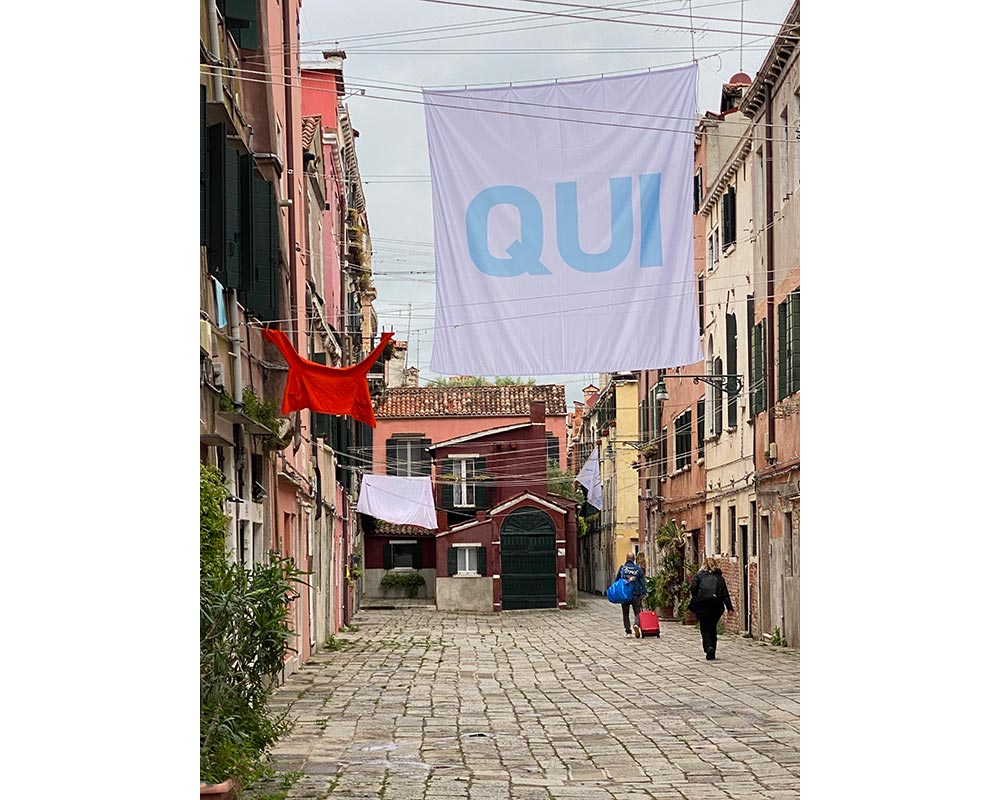
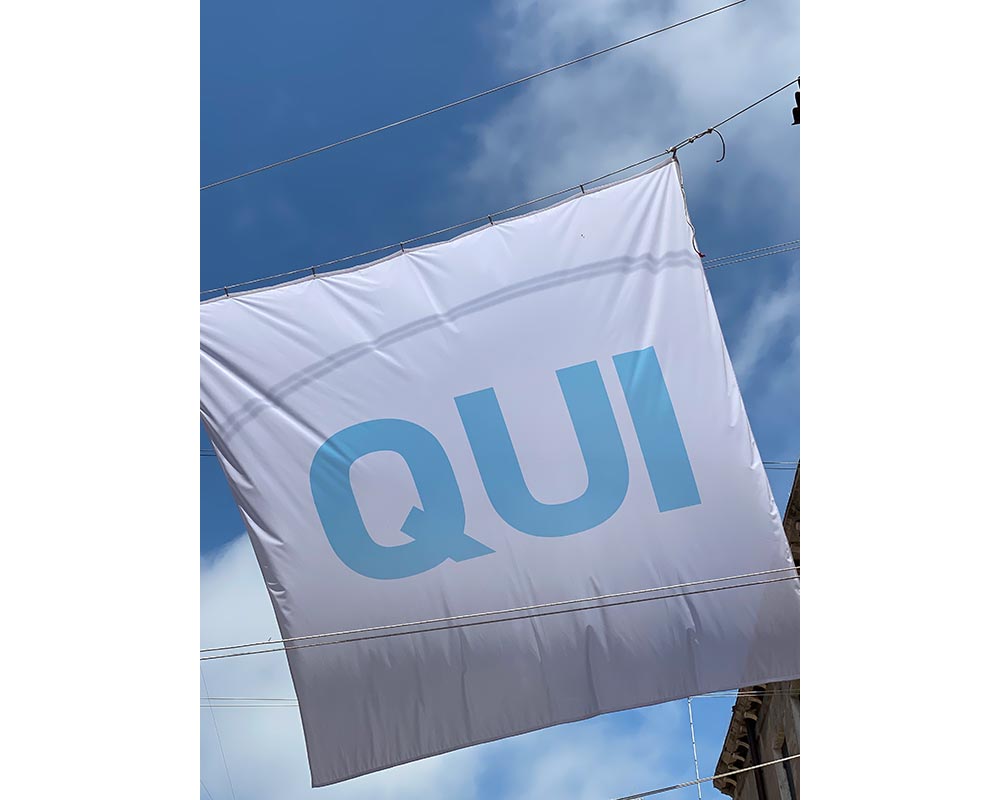
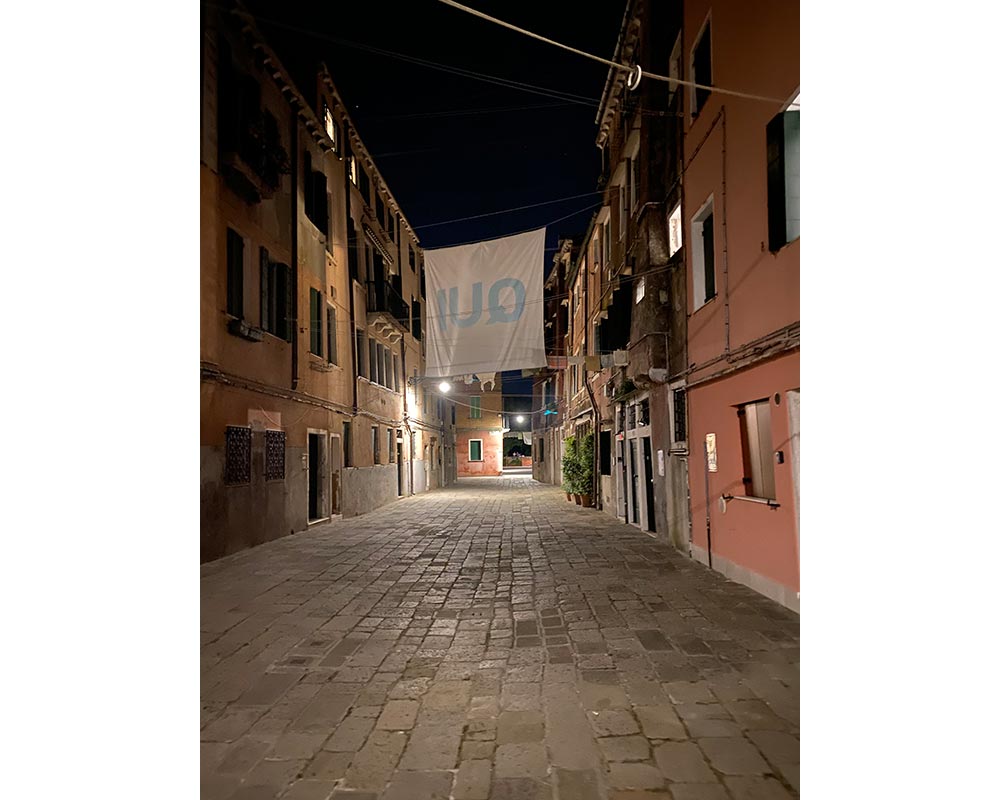
Installation of a 3m x 3m flag near the Giardini at the Venice Biennale.
ICI(QUI)
Un mot. Deux langues. Une question suspendue dans l’air de Venise.
QUI — en italien, ici. Un ancrage, une désignation du lieu. Nous sommes là, sur cette terre fragile posée sur l’eau, à cet endroit précis du monde où la beauté et la menace coexistent depuis des siècles.
QUI — en français, qui. Une interrogation identitaire portée par le vent du drapeau. Qui es-tu ? Qui sommes-nous ?
Ce drapeau flotte à l’intersection de ces deux sens, là où le lieu rencontre l’identité. Ici et Qui se confondent : être quelque part, c’est aussi être quelqu’un.
À Venise, cette double question prend une résonance particulière. Les Vénitiens sont ici — fiers de leur ville singulière, de leur culture millénaire, de leur façon d’habiter l’eau et la pierre. Mais cet ici est menacé. Par la montée des eaux. Par le flot des visiteurs qui traverse la ville sans s’y poser. Par une disparition lente et documentée de ceux qui y vivent vraiment.
Alors QUI devient une injonction autant qu’une interrogation : Sois présent. Sois conscient. Regarde où tu es. Regarde qui tu es.
Et toi, visiteur, passant, touriste, habitant — QUI es-tu, ici ?
QUI : Who, Here.
One word. Two languages. A question hanging in the air of Venice.
QUI — in Italian, here. An anchor, a designation of place. We are here, on this fragile land set upon the water, at this precise spot in the world where beauty and menace have coexisted for centuries.
QUI — in French, who. A question of identity carried by the wind in the flag. Who are you? Who are we?
This flag flies at the intersection of these two meanings, where place meets identity.
Here and Who merge: to be somewhere is also to be someone.
In Venice, this dual question takes on a particular resonance. The Venetians are here — proud of their unique city, their millennia-old culture, their way of inhabiting water and stone. But this ‘here’ is under threat. From rising waters. From the flood of visitors who pass through the city without settling there. From the slow, documented disappearance of those who truly live there.
So QUI becomes both a command and a question: Be present. Be aware. Look at where you are. Look at who you are.
And you, visitor, passer-by, tourist, resident — WHO are you, here?
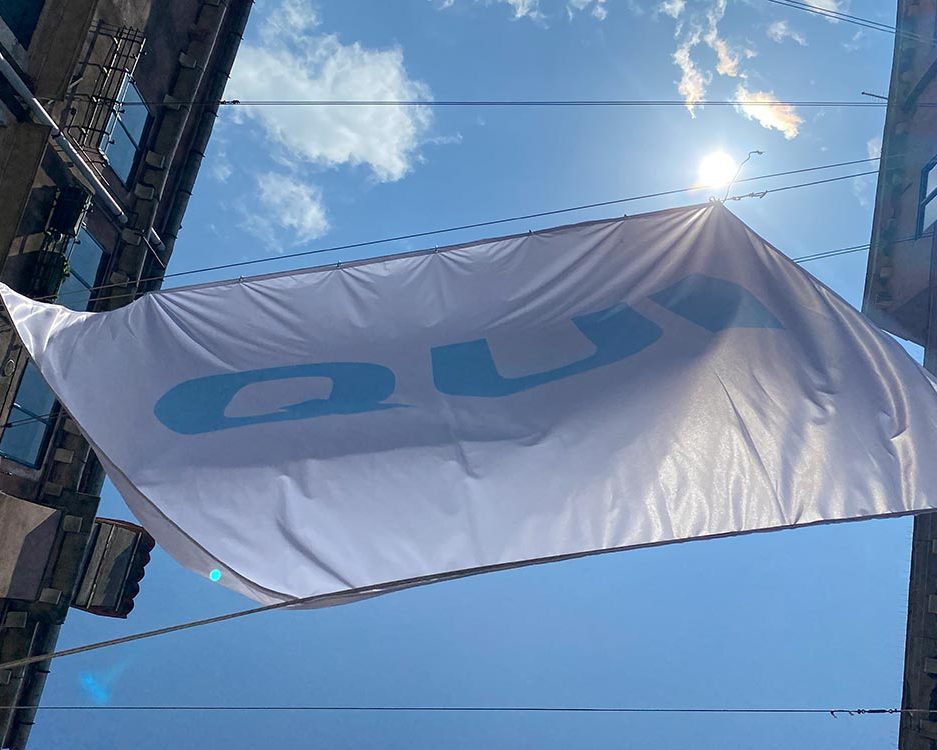
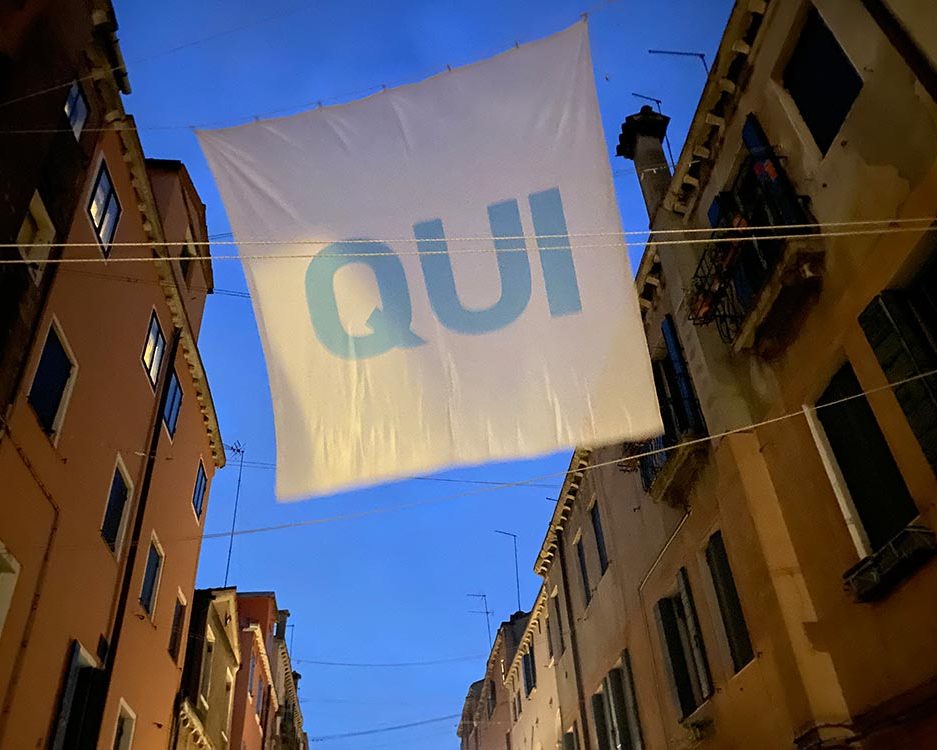
Installazione di una bandiera di 3 m x 3 m nei pressi dei Giardini della Biennale di Venezia.
QUI : Qui? Ici.
Una parola. Due lingue. Una domanda che fluttua nell’atmosfera veneziana. QUI in italiano, ICI in francese. Un ancoraggio, un luogo designato. Ci troviamo qui, su questa terra che emerge dall’acqua, in questo esatto luogo del mondo dove la bellezza e la minaccia coesistono da secoli.
QUI, in francese: Who in inglese. Una domanda trasportata dal vento della bandiera. Chi sei tu? Chi siamo noi?
Questa bandiera fluttua tra questi due sensi, nel punto esatto dive il luogo in cui si trova incontra l’identità. ICI e QUI si intersecano: trovarsi da qualche parte, significa essere.
A Venezia, questa duplice domanda ha una certa risonanza.
I veneziani si trovano QUI, fieri della loro città che la rende unica al mondo, della loro cultura millenaria, del loro modo di vivere il mare e le loro costruzioni di cemento. Ma questo QUI è minacciato per l’innalzamento del livello del mare, per l’affluenza dei visitatori che visitano la città senza mai fermarsi ad ammirarla, per l’abbandono lento e censito dei suoi abitanti.
Allora Qui diventa tanto un obbligo quanto un’interrogazione: esserci, prendere coscienza, capire dove di trovi:
E tu, visitatore, viandante, turista, abitante, QUI ti trovi, ICI?

Un ringraziamento speciale va al mio assistente di progetto, Diego Colò e al mio caro amico veneziano Enrico Bergonzi.
Traduzione e adattamento dal francese all’italiano a cura di Annamaria Biroccio.